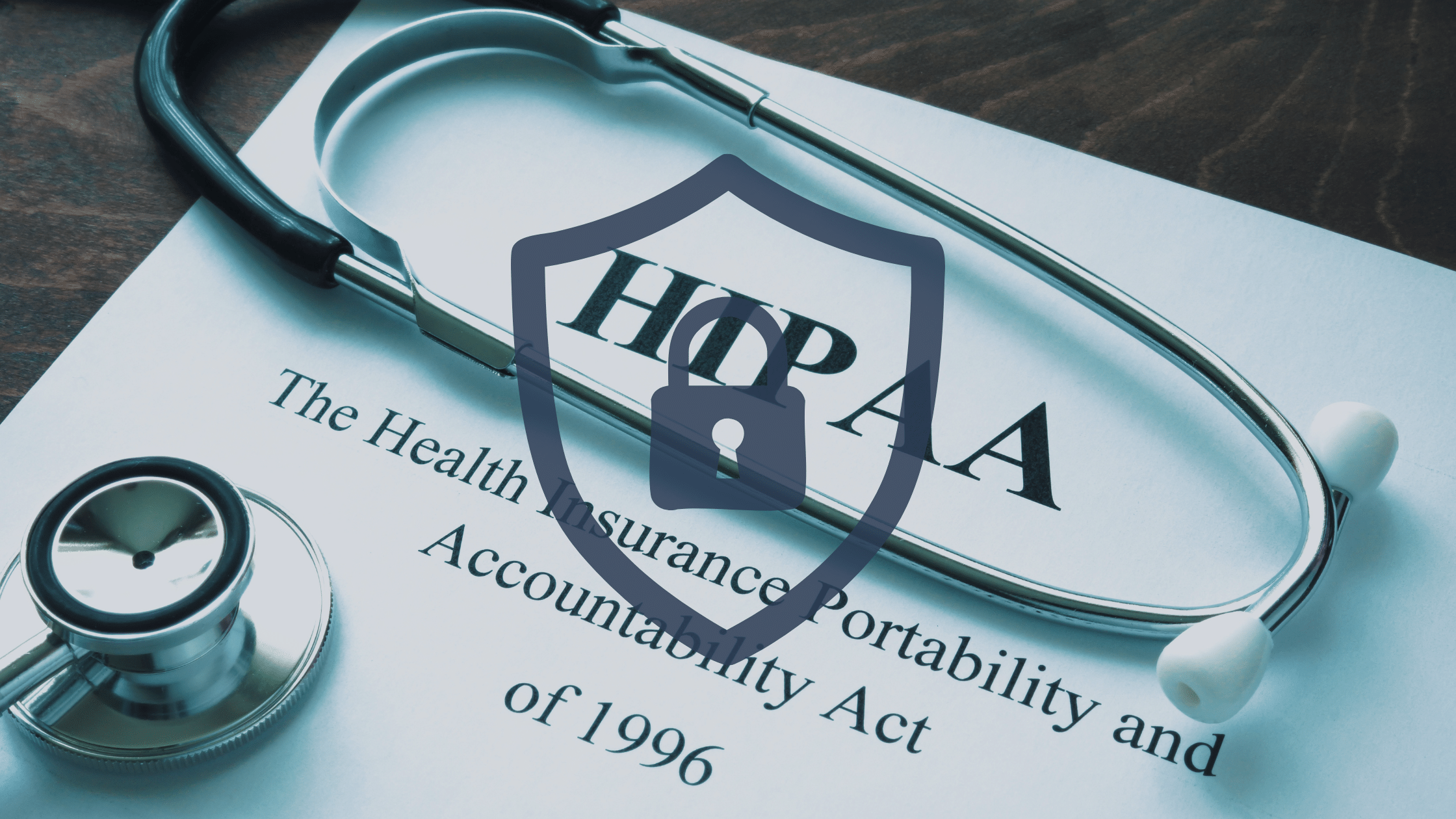
 When most dental professionals hear “HIPAA,” their minds immediately go to patient privacy.
Don’t discuss a patient’s treatment where others can hear.
Don’t leave records sitting on the front desk.
Don’t send protected information carelessly.
Those things certainly matter.
But HIPAA security for dental practices also reaches deeply into the technology your office uses every single day.
Your workstations.
Your server.
Your email.
Your remote access.
Your backups.
Your software accounts.
Your network.
And the challenge is that some of the biggest technology risks inside a dental practice are remarkably easy to overlook.
Everything appears to be functioning. Patients are being treated. Claims are going out. X-rays are loading.
So everyone assumes the technology is fine.
Until it isn’t.
Here are several commonly overlooked HIPAA security issues dental practice owners should understand.
Mistake #1: Assuming Antivirus Means Your Practice Is Secure
Antivirus software is useful.
It is not an entire cybersecurity strategy.
Modern dental offices rely on interconnected systems that can potentially be affected through email accounts, weak passwords, vulnerable remote access, outdated software, stolen credentials, infected computers, improperly configured networks, and other attack paths.
Effective HIPAA security for dental practices requires looking at the entire technology environment.
The HIPAA Security Rule addresses administrative, physical, and technical safeguards designed to protect electronic protected health information.
That means security cannot be reduced to a single product installed on a computer.
A better question is:
What layers are protecting our patient information?
Those layers may include endpoint protection, email security, multifactor authentication, appropriate firewalls, monitoring, patching, access controls, backup protection, staff education, and documented policies and procedures.
Think layers—not magic software.
Mistake #2: Never Completing a Thorough Security Risk Analysis
This is one of the most important areas to understand.
HHS explains that regulated entities are required to perform an accurate and thorough assessment of potential risks and vulnerabilities affecting the confidentiality, integrity, and availability of electronic protected health information.
In plain English?
You need to know where your protected information lives, how it is accessed, what could put it at risk, and what you are doing about those risks.
A risk analysis is foundational to HIPAA security for dental practices because it helps expose problems that may otherwise remain invisible.
Maybe your remote access has not been reviewed in years.
Maybe a former employee still has access to an account.
Maybe the backup system is reporting failures nobody is reviewing.
Maybe your server is running aging software.
Maybe team members are sharing logins because it feels more convenient.
You cannot meaningfully reduce risks you have never identified.
HHS also distinguishes between risk analysis—identifying and evaluating risks—and risk management, which involves implementing security measures to reduce those risks.
In other words, checking the box is not the goal.
Reducing the risk is.
Mistake #3: Giving Too Many People Too Much Access
Convenience has a sneaky way of becoming policy inside a busy dental practice.
Someone needs temporary access to something.
A password gets shared.
One login becomes the office login.
An employee changes positions, but nobody changes their permissions.
A staff member leaves, but an old account remains active.
Months later, nobody remembers why everything was configured that way.
Good HIPAA security for dental practices includes controlling who can access sensitive information and systems.
Each employee should have the access needed to perform their responsibilities—not unlimited access simply because it is easier to configure.
Individual accounts also improve accountability.
When everyone signs in using the same username, determining who did what becomes much harder.
That matters for both security and troubleshooting.
Mistake #4: Treating Former Employee Access as an HR Detail
When somebody leaves your practice, you collect keys, change alarm codes if necessary, and remove them from payroll.
Technology access deserves the same attention.
Former team members may have had access to:
Microsoft 365
Practice management software
Cloud storage
Patient communication systems
Remote access tools
Vendor portals
Shared files
Email
Administrative accounts
Offboarding should include a documented technology process that removes or disables access promptly.
This is particularly important when accounts contain or provide access to patient information.
A strong dental IT partner can help turn employee offboarding from “Did anyone remember to call IT?” into a standard process.
Mistake #5: Assuming the Backup Is Fine Because Nobody Reported a Problem
Few phrases should make a dental practice owner more nervous than:
“I think the backup is working.”
Your backups are your safety net after server failures, accidental deletion, ransomware, hardware problems, and other serious events.
And yet backups often remain invisible until somebody needs them.
HHS ransomware guidance stresses both maintaining backups and periodically performing test restorations to confirm backed-up information can actually be recovered.
That is a meaningful distinction.
Backup completed tells you data was copied somewhere.
Successful test restore demonstrates that usable data can come back.
For HIPAA security for dental practices, backup conversations should include questions such as:
How frequently is critical data backed up?
Where are copies stored?
Are backups encrypted appropriately?
Can ransomware or compromised accounts reach them?
Who monitors failures?
When was restoration last tested?
How quickly can essential systems be restored?
If nobody can confidently answer those questions, your practice may have more uncertainty than protection.
Mistake #6: Ignoring Old Computers and Servers Because They Still Work
Dental practices are famous for keeping equipment alive.
Sometimes that is financially smart.
Other times it creates unnecessary risk.
An aging computer may still open your practice management software perfectly well while running an operating system or software component that is no longer appropriately supported.
Older servers can create similar concerns.
The machine turning on every morning is not the same thing as the environment being healthy.
Technology planning should include a lifecycle strategy.
Know what equipment you have.
Know approximately how old it is.
Know when important software reaches end of support.
And budget for replacements before failure forces the decision for you.
Proactive replacement also makes costs more predictable.
A planned server migration is generally much easier on a practice than a dead server at 7:47 Monday morning.
Mistake #7: Forgetting About Email Security
Email remains one of the easiest ways to trick busy people.
That matters enormously in dentistry because dental teams receive messages all day from patients, vendors, insurers, labs, suppliers, software companies, and other organizations.
An email that appears routine can easily blend into the workload.
One convincing login page may be all it takes for an employee to enter their Microsoft 365 credentials into a fraudulent website.
From there, attackers may attempt to use that account to access additional information or impersonate the employee.
Strong HIPAA security for dental practices should therefore include email protection and secure account practices, especially multifactor authentication where appropriate.
Staff awareness matters too.
Team members do not need to become cybersecurity professionals.
They do need to know when something looks strange and how to report it quickly.
Mistake #8: Using Convenience-Based Remote Access
Remote access became normal for many businesses.
Practice owners want to review information from home.
Billing staff may occasionally need remote access.
Outside vendors sometimes need to connect to practice systems.
But remote access needs to be deliberate and secure.
An old remote access method that somebody installed years ago and forgot about can become a serious concern.
Your practice should understand:
Who can connect remotely?
What systems can they access?
How are they authenticated?
Are access methods still actively supported and secured?
Are vendor connections removed when no longer needed?
The answer should never be, “We have no idea, but Bob set that up in 2019.”
Mistake #9: Thinking HIPAA Is Something You “Finish”
Security is not a binder you complete once and place on a shelf.
Technology changes.
Employees change.
Threats change.
Vendors change.
Your practice may add workstations, cloud services, imaging equipment, remote workers, or even another location.
HHS guidance notes that entities should periodically evaluate security measures and reevaluate risks to electronic protected health information.
That is why HIPAA security for dental practices needs to become an ongoing business process rather than an annual panic.
Your technology provider should help you understand where improvements are needed and build a realistic roadmap for addressing them.
The Goal Is Not to Make the Dentist an IT Expert
This part is important.
You went to dental school to care for patients—not to become a firewall administrator.
You should absolutely understand the business risks surrounding your technology.
But you should not be spending Friday afternoon checking backup logs, researching server patches, coordinating software vendors, and wondering whether your cybersecurity protection is configured correctly.
Your IT partner should be able to explain those things in normal language and take responsibility for managing them.
That includes working with your practice management vendor, imaging company, internet provider, phone provider, and other technology vendors instead of forcing your office manager to play technology traffic cop.
You can learn more about that approach through ILER’s dental IT services.
Better HIPAA Security Starts With Better Visibility
The biggest security problem in many practices is not that the owner does not care.
It is that the owner does not know what they do not know.
That uncertainty is exhausting.
You should be able to ask:
Are our backups healthy?
Are our systems current?
Is access controlled appropriately?
Are old accounts removed?
Is our email protected?
Do we know our biggest technology risks?
Could we recover if something went wrong?
And somebody should be able to give you straightforward answers.
No alphabet soup.
No thirty-minute explanation involving technical terms you have never heard before.
Just clarity.
Because strong HIPAA security for dental practices is ultimately about protecting the patients who trust you, protecting the business you have built, and giving your team reliable technology they can confidently use every day.
If you are not sure where your vulnerabilities are today, start with a Free Dental IT Review at iler-dental-it.com.
Finding the overlooked risks now is a whole lot easier than explaining them after an incident.